
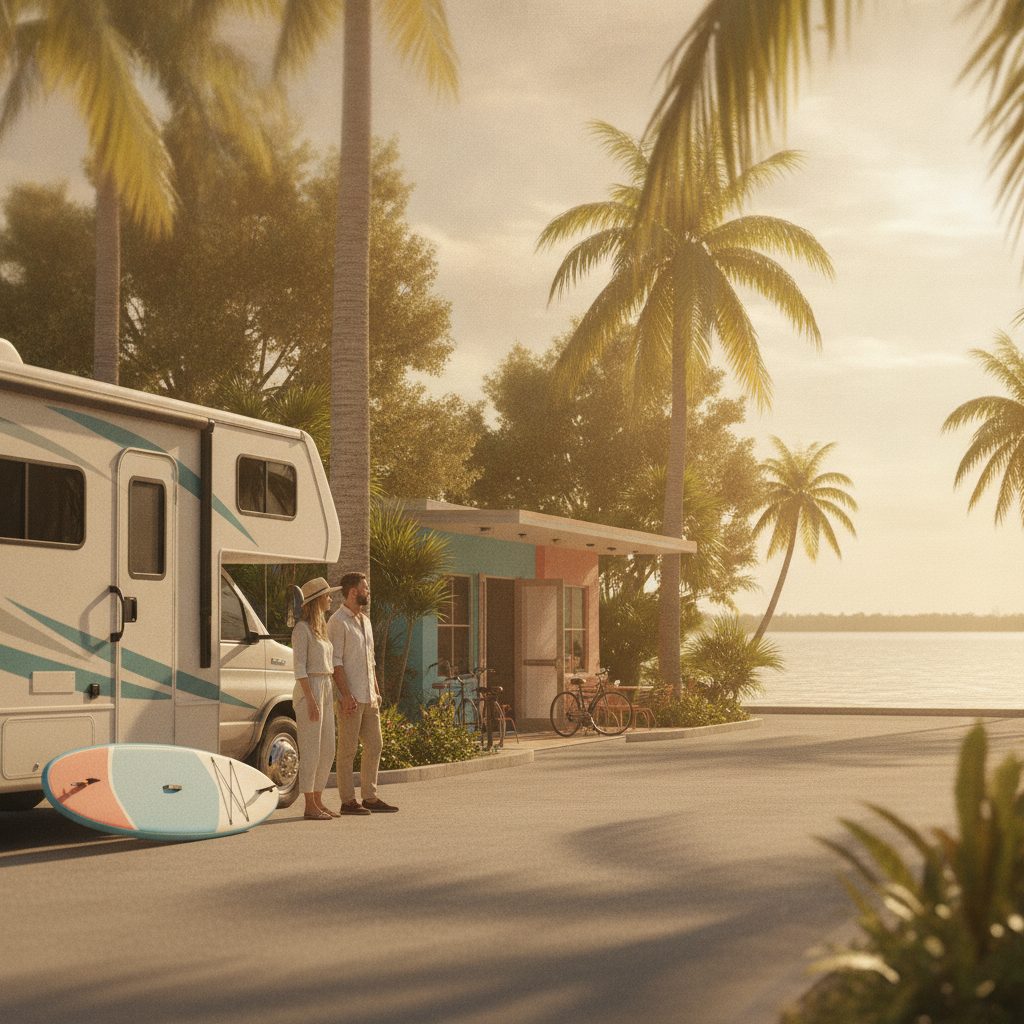

RV Insurance vs. Car Insurance: What's Different?
An RV or motorhome is more than just a vehicle; it's often a temporary home. Because of this, RV insurance offers coverages that go beyond a standard auto policy. While it includes typical auto coverages like liability, collision, and comprehensive, it also addresses the unique aspects of owning a recreational vehicle, especially for those exploring Florida's diverse landscapes.
Protecting Your Living Space and Contents
A significant difference is the coverage for the personal belongings inside your RV. Standard auto policies typically won't cover items like electronics, clothing, or camping gear stored in your vehicle. RV insurance can include personal effects coverage to protect these items. Additionally, coverage for permanent attachments like awnings, satellite dishes, or custom modifications is often available.
Liability for Your Campsite
Another unique feature is campsite liability. This provides protection if someone is injured in or around your parked RV at a campsite, or if you cause damage to another person's property while parked. This is similar to homeowner's liability and is a crucial consideration when you're using your RV as a temporary residence.
Full-Timer vs. Part-Timer Coverage
Whether you use your RV for weekend trips or live in it full-time impacts the type of insurance you need. Full-timer RV insurance provides more comprehensive coverage, similar to a homeowner's policy, recognizing that your RV is your primary residence. If you're a part-timer, your policy might focus more on travel and occasional use. Discussing your usage patterns with an agent can help determine the right fit for your RV adventures from Wilton Manors.
Get answers from a local independent agent.
Free, no-signup matching with licensed insurance agents in your community. Real people, not call centers.


